Ocean’s chronologies
Sjávartímatal
Efniviður: hvítur steinleir
Tækni: Þrívíddarprentað keramík
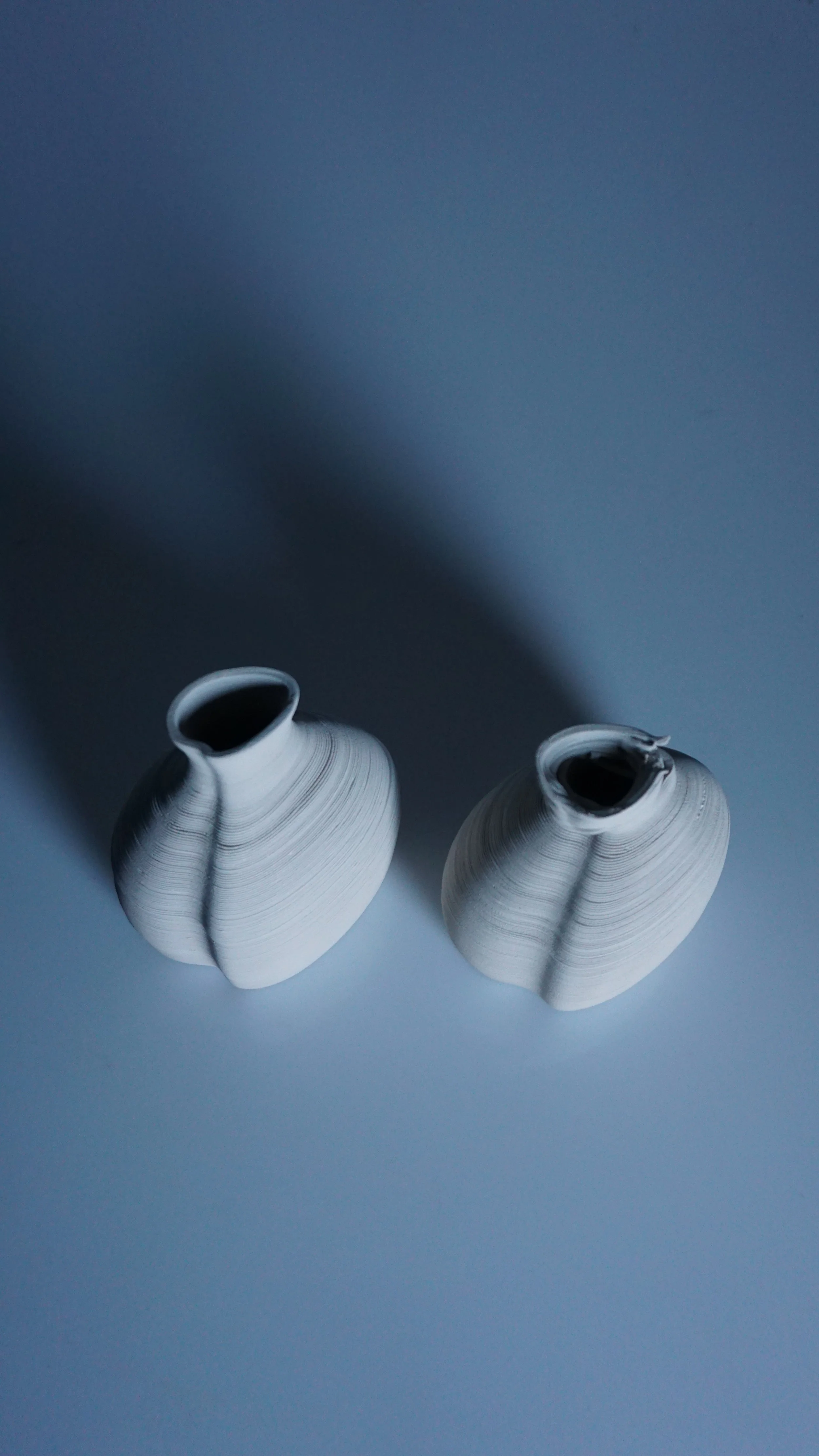
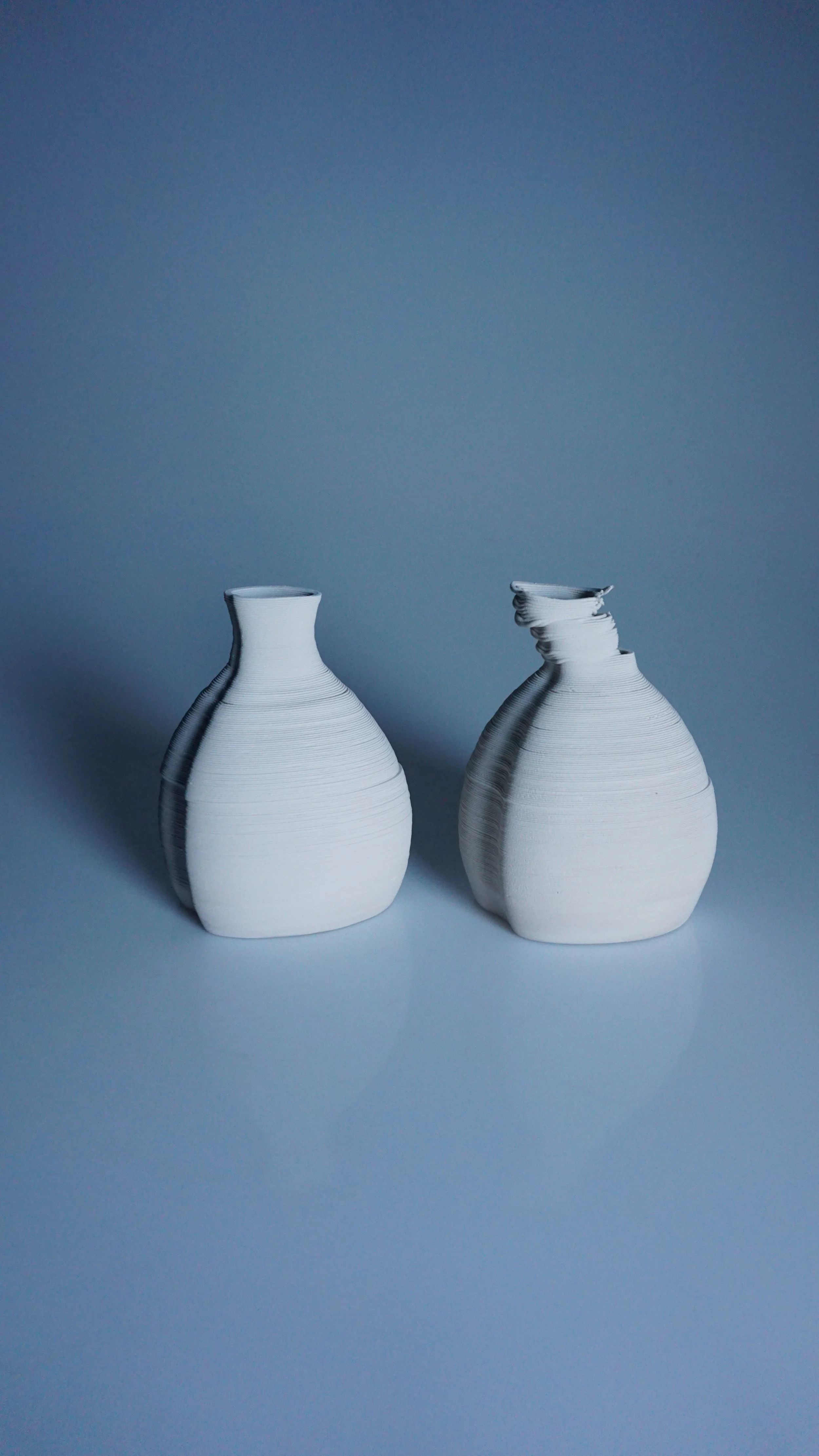
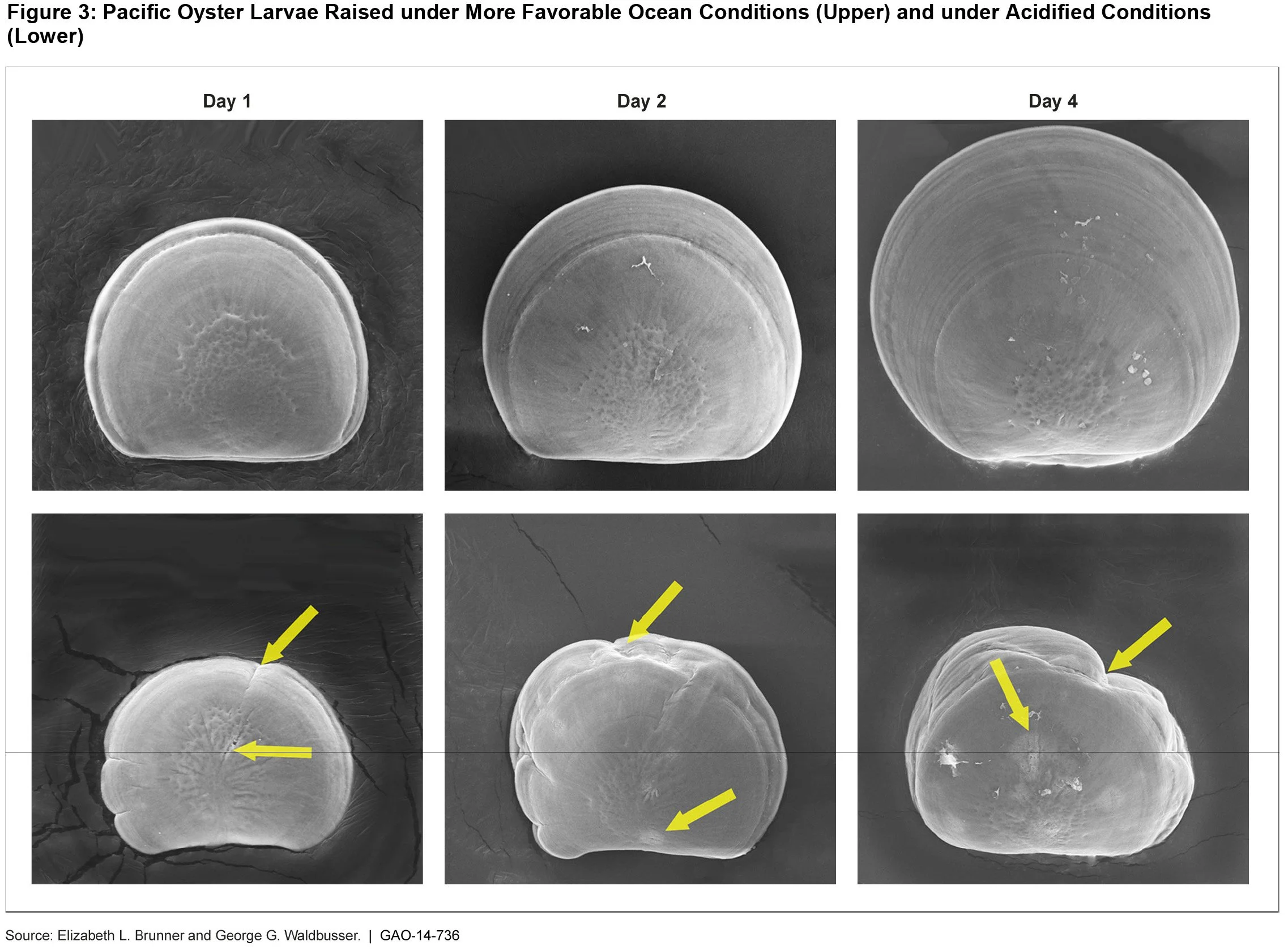
Sjávartímatal er tilraun til þess að miðla framtíðum hafsins og kalkmyndunar í formi vasa. Notast er við graf sem sýnir annars vegar óheftandi losun á CO2 og hins vegar ef mannkynið dregur hana gríðarlega saman. Mikil óvissa fylgir súrnun sjávar og örlögum kalkmyndandi lífvera, en samkvæmt verstu spám gæti hafið farið úr pH 8.1 niður fyrir pH 7.7 um næstu aldamót. Nú þegar hefur sýrustigið lækkað úr pH 8.2 í pH 8.1 í kjölfar iðnbyltingarinnar.
Til þess að miðla ástandi kalksins í hafinu,
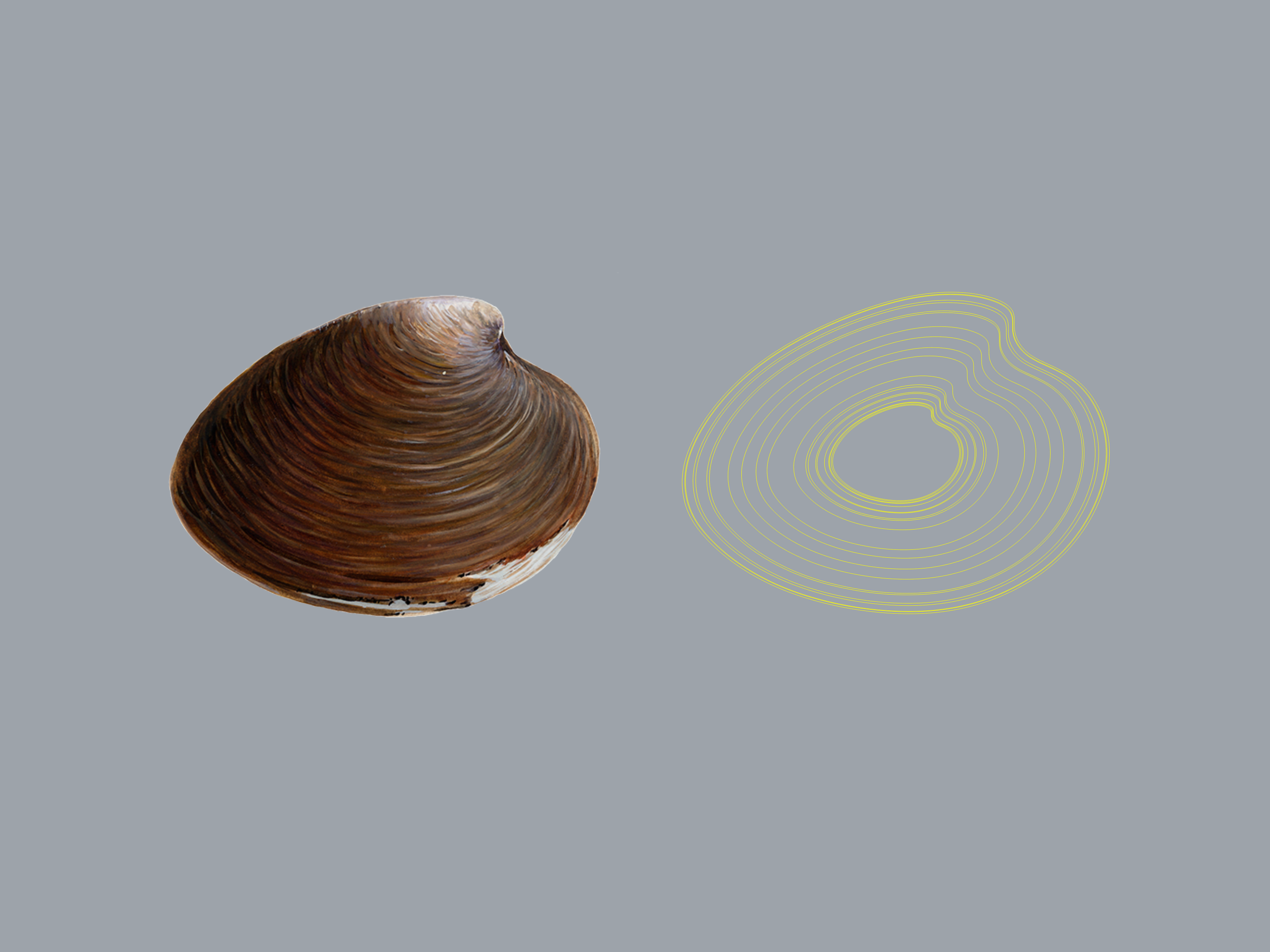
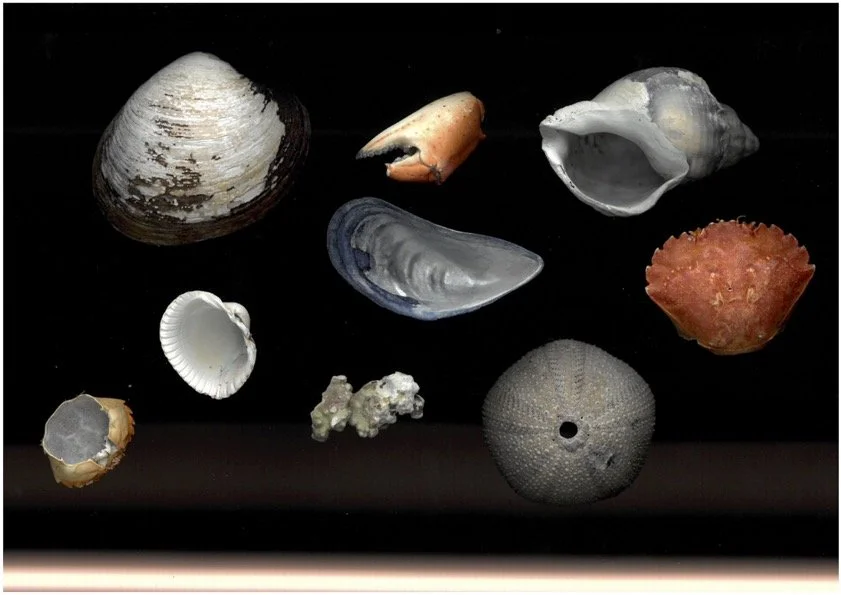
er stuðst við greinina skeljatímatal, þar sem lesið er í umhverfisaðstæður út frá árhringjum skeljarinnar. Form kúfskeljar (Arctica Islandica) er valið fyrir vasann, þar sem hún hefur verið notuð til að vakta umhverfið við Íslandsstrendur.
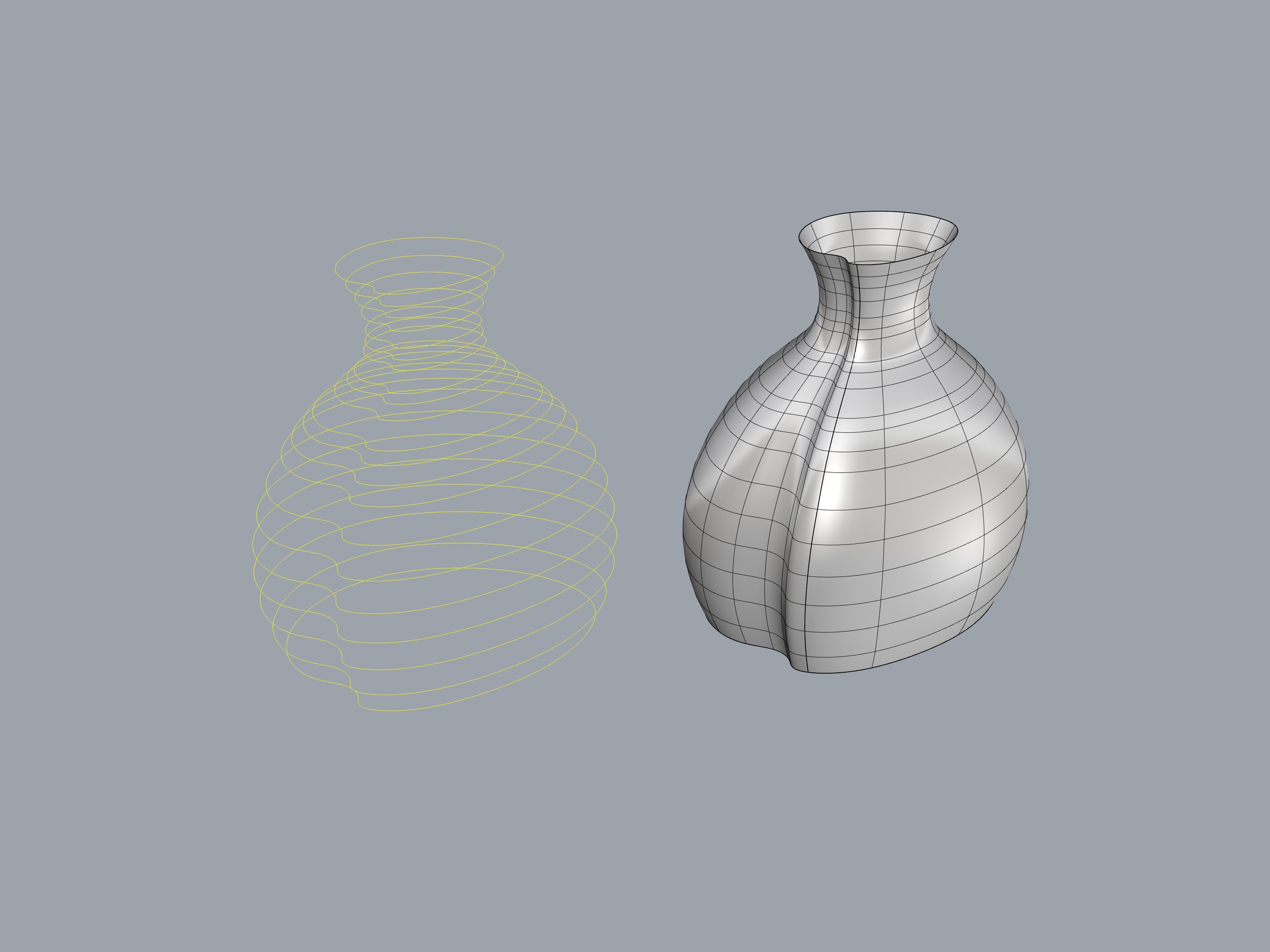
Þrívíddarprentarinn prentar í lögum sem líkjast árhringjum og vísar þannig í tímalínu vasans. Vasinn er færður úr stað í takt við breytt pH gildi, sem miðlar frávikum í kalkmettun, þar sem sífellt erfiðara verður fyrir lífverur að mynda kalk. Sýna því vasarnir stöðugan jafnt sem óstöðugan vöxt kalks í hafinu, í yfir 20 milljón ár.
Ocean’s chronologies
Material: White stoneware.
Technology: 3d printed ceramics
Ocean’s chronologies is an attempt to convey futures of the sea and calcification in the form of a vase. It’s based on a graph which shows on one hand unrestricted emissions of CO2, and on the other hand if humanity reduces it enormously. Great uncertainty accompanies ocean acidification and the fate of calcifying organisms, but according to the worst forecasts, the ocean could drop from pH 8.1 down to pH 7.7 by the turn of the century. It has already dropped from pH 8.2 to pH 8.1 following the Industrial Revolution.
The field of sclerochronology is used in order to convey the state of the calcium carbonate in the ocean, where environmental conditions can be read based on the annual growth rings of the shell. The form of the quahog clam (Arctica Islandica) is chosen for the vase, where it has been used for monitoring the marine environment around Iceland.
The 3D printer prints layers that resembles
the annual rings, and refers to the timeline of the vase. The deviation of calcium carbonate saturation is formed by moving the vase from its original position in parallel with the changing pH values, where it becomes increasingly difficult for organisms to form calcium carbonate. Therefore, the vases showcase stable as well as unstable growth of calcium carbonate in the ocean, for over 20 million years.